Exploring challenges and opportunities in trans-disciplinary research in Africa
Trans-disciplinary Futures Research Program for Africa is a collaboration between African academia and local/indigenous communities, aimed at collectively reimagining and modelling research capacity requirements for the future. The program acknowledges the value of academic researchers and local communities to speak with each other. To best co-imagine, co-develop, and co-create solutions to complex and wicked problems through impact collaborations and partnerships. This program is unique in many ways, but largely so, because it allows early-futures researchers within Africa to regain the agency in not just setting the action research agenda for the future they desire, but also do so with the commons the future of Africa wants.
As part of our impact programs, the program is running a series of Trans-disciplinary Quarterly Dialogues (TQDs) that are aimed at deepening the understanding of research capacity issues around climate futures, one-health, future resilient cities, indigenous rights, and impact technology for socio-ecological resilience. Early this year, Douglas Logedi, from the Institute for Climate Change & Adaptation (ICCA) , University of Nairobi spoke with trans-disciplinary researchers from Africa, Australia, and the US, taking stock of lessons and experiences from applied trans-disciplinary research model in Africa, Australia, and the US. Furthermore, he dived deep into tomorrow and probed; what potential opportunities exist for scaling up trans-disciplinary research in Africa?
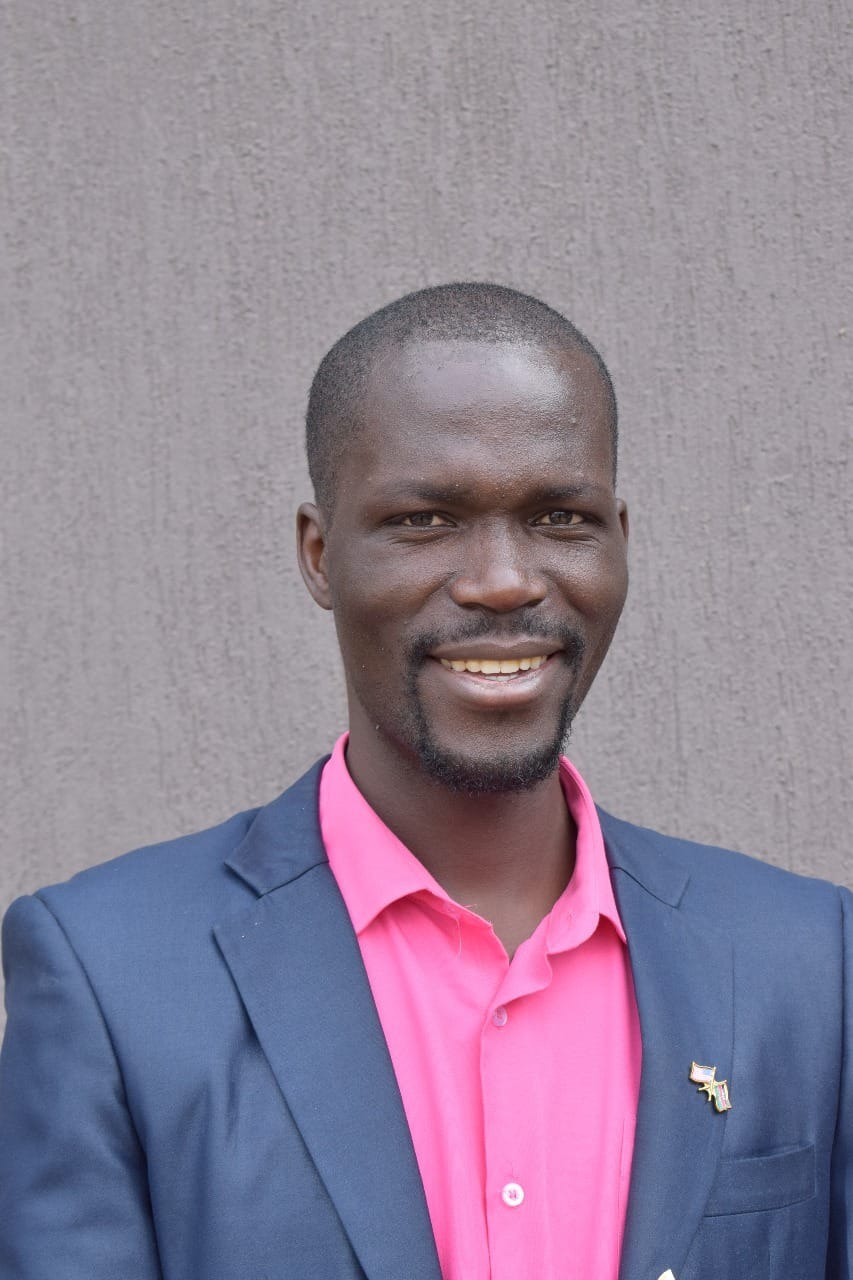
Douglas Logedi
Transdisciplinary Researcher, University of Nairobi
Colleagues, it’s important to set some context. Henry Gandhi researches at the Institute for Climate Change & Adaptation (ICCA), University of Nairobi where trans-disciplinary research model has been applied for over 10 years. Briefly tell us what exactly trans-disciplinary research is and why it is important take stock of its application in various contexts?
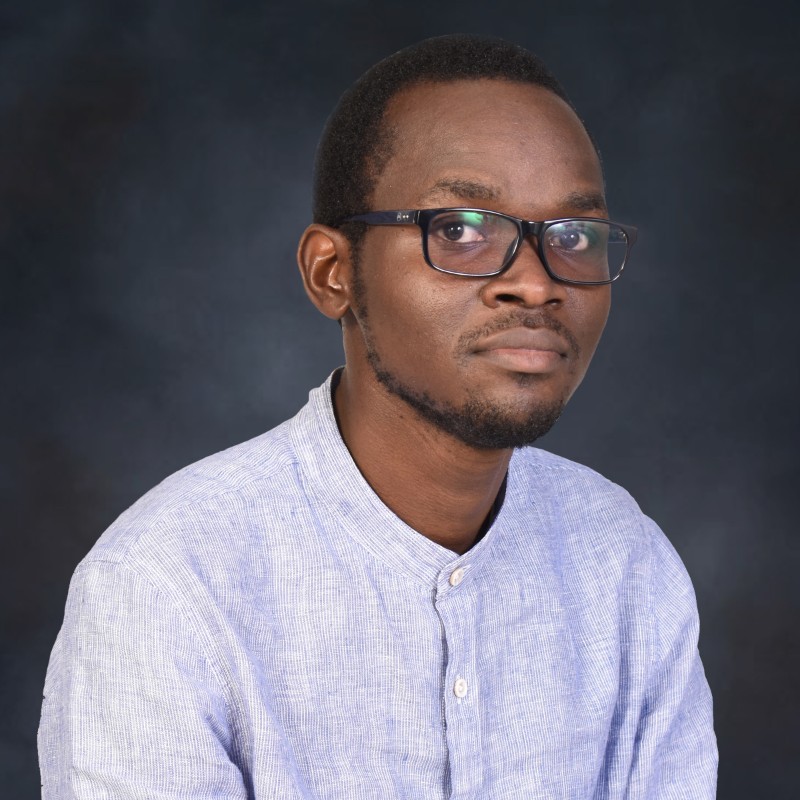
Henry Gandhi
Research Associate, Institute for Climate Change and Adaptation (ICCA), University of Nairobi
Thank you, Douglas. I wish to welcome you all to this important conversation. For many
years, there have been contestations on not just the trans-disciplinary research (TDR)
model, but also what is believed to truly constitute science as is the tradition set by
other ‘scientific’ models. These notwithstanding, there have been discussions about the need
to rethink our research methods for us to be ahead of global challenges, particularly,
climate change. In simple terms, we say trans-disciplinary research is in action when
researchers (including academic) and local communities speak with each other in the design,
implementation, and evaluation of solutions to oft-complex challenges in our
societies.
It’s different from interdisciplinary approaches where mainstream disciplines are confined
and made to speak with each other without necessarily asking for whom and/or which
socio-ecological challenges the outputs of such expeditions are meant to serve. In other
words, trans-disciplinary research approaches fall the walls of research (as Mawazo Institute righty puts it), it lets go of
knowledge power, control or monopoly, and usher in, mutual respect, healthy
relations and diverse positionalities that eventually allow for the co-creation and
sharing of knowledge co-generated.
Douglas Logedi
Transdisciplinary Researcher, University of Nairobi
Thank you. That’s illuminating. Now, let’s come to you Robert. How does all these relate to what you are currently doing as a young academic and researcher in transportation and mobility? Tell us about the various research approaches that are widely used at the University of Namibia as well as Stellenbosch University where you are currently based.

Robert Ambunda
Lead Researcher, Transport and Mobility Lab - University of Namibia
In mobility and transportation, the challenges we face require long-term transformation.
This means that, to offer appropriate and relevant solutions, as researchers, we need to go
beyond the engineering or structural aspects into the social aspect of research. This may
involve partnering with the different stakeholders in research to provide relevant
solutions. As such, trans-disciplinary research is able to solve problems that cannot be
solved by one discipline. That is, it is able to connect different disciplines and
stakeholders which then, guarantees sufficient and efficient consideration of all relevant
factors to address necessary and real world problems in this context.
With trans-disciplinary research, we are able to combine knowledge of researchers with those
of the industry and other civil actors taking research out of a particular area or career.
Trans-disciplinary research allows us to move from the traditional methods of research which
only focused on one area and transcends to involve other sectors that are impactful to one's
study. Additionally, it focuses on the impact of our research on the immediate community and
environment.
Douglas Logedi
Transdisciplinary Researcher, University of Nairobi
What methods have you used that reflect trans-disciplinary research?
Robert Ambunda
Lead Researcher, Transport and Mobility Lab - University of Namibia
One of our projects entailed providing non-motorized transport infrastructure to the community around the university. This was meant to be infrastructure for pedestrians and cyclists. What this project entailed was establishing properly-designed infrastructure that not only meets the policy standards but is also safe and comfortable for the public. As such, our research had to transcend the research lab and move out to seek the perception of the community on the project.
Douglas Logedi
Transdisciplinary Researcher, University of Nairobi
Did they like the project and feel safe using the infrastructure? I’m wondering if the community still uses the infrastructure.
Robert Ambunda
Lead Researcher, Transport and Mobility Lab - University of Namibia
Well, the trans-disciplinary aspect of the research enabled us to use a broad-based approach to research by interviewing the people and investigating the social aspect of the research. This later on earned us a nickname, recovering transport engineer. That means, we are not only concerned about the numbers and the guidelines, but we are also cautious of the social lens and look into the potential impact and solution on the community.
Douglas Logedi
Transdisciplinary Researcher, University of Nairobi
We would like you to build on what Henry and Robert have talked about, in relation to the framing and applied context of trans-disciplinary research. As a postdoctoral trans-disciplinary scholar at Penn State University, who has also spent part of her research time in Kenya / Africa, what is the state of trans-disciplinary research in the United States and the North America region, and how does it compare to the African outlook? You can also speak to us about the dominant methods of research and how these are continuously evolving.
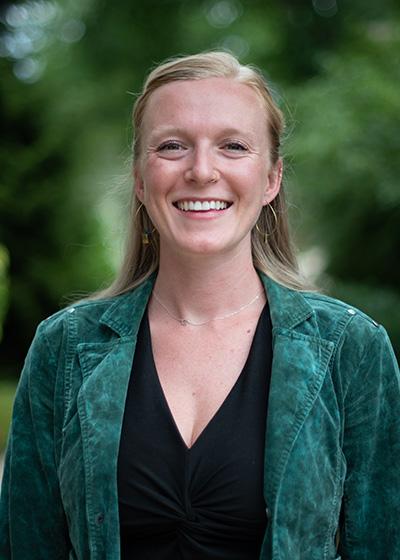
Kaitlyn Spangler
Postdoc Transdisciplinary Scholar, Pennsylvania State University
In Kenya, my research was purely educational. At that time I was an undergraduate and so
most of my work entailed collecting data from the community. This process enabled us to
understand the implications of the research project to the individuals involved in the
project. The main methodology employed was interviewing and having conversations with people
about their livelihoods. In trans-disciplinary research, the research should always impact
people. This brings in the ethical angle of research that looks at the direct and indirect
impact of research to the community. Research should essentially uplift the socio-economic
status and livelihood of the people involved.
In the US, researchers have embraced qualitative data collection methods. Individuals now
plug in to spaces where conversations are happening. This may include aspects such as
research groups, social forums or even church groups. Over time, researchers have realized
the power of data. Trans-disciplinary research enhances doing justice to the collected data.
With the research involving diverse backgrounds, people are able to ask questions that
really matter, rather than questions that fit into specific research silos.
Douglas Logedi
Transdisciplinary Researcher, University of Nairobi
Harrison, you have heard from colleagues from Universities - both based here in Africa and the US. As a Community-Based Mangrove Restoration (CBMR) Champion, you can begin by telling us who CBRCs are and why they are important in strengthening trans-disciplinary futures research in Africa.
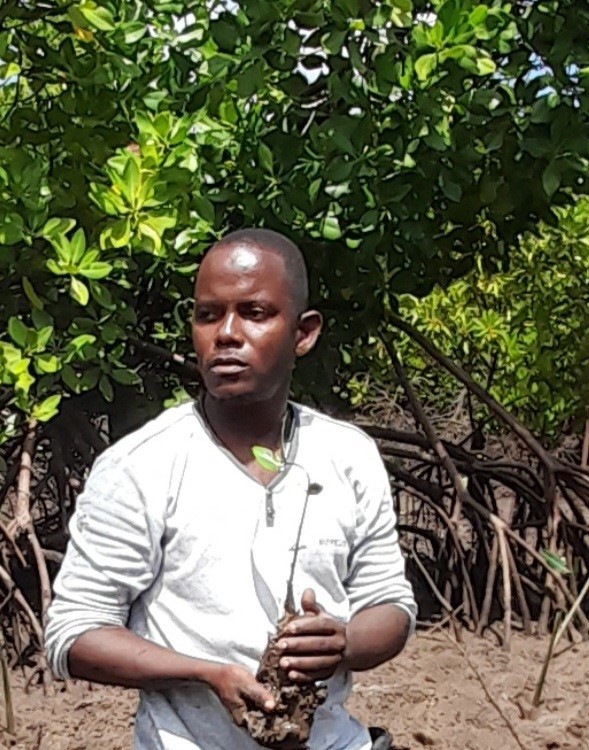
Harrison Ezzdin
Grassroot Champion, CBMER-Lamu,Kenya
Community-Based Mangrove Restoration Champions are heavily involved in the research and restoration of mangrove ecosystems. This entails researching what is the suitable area for mangrove restoration, establishing a nursery for replanting mangrove at a later stage, investigating pests and diseases that attack mangrove forest and working with researchers to find solutions. CBMR Champions partner with researchers from universities and other places to provide true knowledge on mangrove ecosystems.
Douglas Logedi
Transdisciplinary Researcher, University of Nairobi
I’m a little more curious, Harrison. What exactly is community-based research and how does it fit into the broader trans-disciplinary research?
Harrison Ezzdin
Grassroot Champion, CBMER-Lamu,Kenya
I would say that trans-disciplinary research predominantly entails community-based research. It is, therefore, important to understand what the latter entails and how it strengthens trans-disciplinary research as compared to other forms of research. As the name suggests, community-based research is one that involves community. Engaging the community requires integrating indigenous and scientific approaches. It allows one to obtain accurate data from the community. One is able to ask meaningful questions as well as earn mutual respect and trust in the local community. Trans-disciplinary research thrives on community-based research and this enhances commitment to long-term sustainable relationships.
Douglas Logedi
Transdisciplinary Researcher, University of Nairobi
Thank you, Harrison. What do you think are some of the challenges that make it difficult to conduct research in a local community?
Harrison Ezzdin
Grassroot Champion, CBMER-Lamu,Kenya
Just like other forms of research, community-based research has its own challenges. Some of which, have been made to be part of the research problem and others which can be resolved with a little bit of intentionality. Some of these challenges include: Inadequate community involvement; communication barriers; poor network coverage in remote areas that makes it difficult to use gadgets requiring network; and compensation for the value of time for the community involved who actually take part in trans-disciplinary research.
Douglas Logedi
Transdisciplinary Researcher, University of Nairobi
Kaitlyn, you have listened to Harrison sharing with us his experience as a community-based mangrove ecosystem restoration champion. What are some of the ways that Universities as whole (both in Africa & the US where you are) can partner with community-based associations to take advantage of opportunities in trans-disciplinary research moving forward? In your opinion and based on the experiences shared here, what do you see as the future of trans-disciplinary research and learning?
Kaitlyn Spangler
Postdoc Transdisciplinary Scholar, Pennsylvania State University
The future of trans-disciplinary research lies in engaging ethical and good long-term
opportunities. This can be achieved by ensuring research is not extractive. To do this, one
needs to have identity and positionality while conducting research. That is understanding
what spaces should one be in, and which spaces should one avoid. Where can one offer a
supportive role? This enhances good relations and ensures researchers position themselves in
ethical and reflective ways.
Secondly, we can improve the fate of trans-disciplinary research by providing more education
opportunities both in primary and pre-college academic spaces. This can be achieved through
having spaces for students to think outside their disciplines, having degree programs that
enhance studying different disciplines, having options to converse with people in different
disciplines and focusing on other metrics of success such as having workshops and
conferences that provide a platform for researchers to share ideas and create bridges and
inroads with people outside the academy.
Douglas Logedi
Transdisciplinary Researcher, University of Nairobi
Thank you, Kaitlyn. Let us come back to you, Robert. There is a lot of research that has been and/or is currently going on across African Universities and other research think tanks in the region. To what extent do you think these research activities actually lead to or generate impact or truly possess value? And maybe linking to this, what in your opinion, really constitutes impact or value?
Robert Ambunda
Lead Researcher, Transport and Mobility Lab - University of Namibia
Trans-disciplinary research provides community based interventions which ensures that the
community feels like they own the solutions provided. The global institutions that
collaborate and sponsor research in the continent have realized the value impact of ideas
and research generated from the continent.
Trans-disciplinary research also charges one to think outside the box and provide
broad-based solutions to research problems. African researchers have insights into the
challenges and issues faced by local communities, hence, they themselves, are better placed
in providing relevant solutions. These insights translate into value that produces
contextualized solutions. The community, thus, benefits both in the social and economic
aspects. This also ensures research moves from the lab to the ground, ensuring the value of
the research is effective. This is because research done in the lab has an impact on the
infrastructure provided to the inhabitants of the community.
Trans-disciplinary research has also moved to interviewing methods. We have moved from
understanding the problem to ensuring the value of the research and understanding is
translated into more observable solutions and impacts that the community, researchers and
other research stakeholders can take ownership of. This ensures that research does not only
benefit academia, but also the community.
Douglas Logedi
Transdisciplinary Researcher, University of Nairobi
Thank you. What can you say about the current funding mechanism for trans-disciplinary or impact research in Africa? How do we improve the true value that is attached to trans-disciplinary research?
Robert Ambunda
Lead Researcher, Transport and Mobility Lab - University of Namibia
Research in Africa is funded by international donors. This limits the African researcher’s
ability to dictate terms and conditions on what to research, that is, the research problem,
the research framework, and methodology among others. This often results in researchers
indulging in superficial research based on conditions that are set somewhere else.
This can be resolved by showing the value of local researchers from the onset, necessitating
the value of knowledge from the global south, creating a balance between knowledge
production in the Global North and Global South. We also need to ensure that academic
researchers from this part of the region are also included and form part of framing of the
problems to be researched and getting their solutions. Finally, it is important to enhance
growth and more opportunities for autonomy to celebrate the value of good knowledge from the
Global South to the global discussion.
Douglas Logedi
Transdisciplinary Researcher, University of Nairobi
What, in your view, must be done to improve the space in which trans-disciplinary research is done?
Robert Ambunda
Lead Researcher, Transport and Mobility Lab - University of Namibia
To improve the current space of trans-disciplinary research in Africa, knowledge production
needs to be defined and carried out by people who live and know the continent they live in.
Understanding who pays for the research versus who does the research is important. The
community can be also be empowered by taking research out of the educated elite and
academia. and involving communities as core stakeholders in research and not just as
observers or sources of data. This will enable the community to view research differently.
Above all, as a researcher, never stop learning! Don’t get too stuck in one way of doing
research. Don’t get too comfortable in your expertise. Always seek to grow.
We also need to investigate the meeting point of trans-disciplinary research and the policy
makers. This may entail, redefining the space for actors as well as agency in research.
Accommodate the needs and the views from the informal sector. Collaboration with the
community and policy makers. Look into aspects of autonomy and powers issues. Understand the
capacity needs and how they keep on evolving over time. How are these needs likely to change
over time? It is also important to have a supporting environment. This could be achieved
through pushing the policy and decision makers out of their comfort zones. Moving beyond our
research bubbles and taking a stand to ensure policies are profitable for research. This is
because policies influence how research is done.
Douglas Logedi
Transdisciplinary Researcher, University of Nairobi
Thank you very much for spending your time to speak with us in this series.